
Every online casino experience starts not with a game, but with the software platform that delivers it. The platform dictates how quickly pages load, whether the slots feel responsive, and how easily you can move between the cashier, live dealer tables, and your account history. For a brand like Bwin Casino, the choice of software infrastructure is a core decision that shapes everything from the variety of games available to the security protocols protecting your transactions. We have examined this landscape thoroughly, and what emerges is a detailed picture. No single platform approach is universally superior, and understanding the trade-offs helps you make more knowledgeable decisions about where to play and what to expect once you log in.
Payment Processing and Cashier Connectivity
The payment system of a casino platform integrates with multiple third-party gateways, each featuring its own settlement times, fee structures, and location-based restrictions. At Bwin Casino, the cashier unifies credit and debit card processors, e-wallet services like PayPal, Skrill, and Neteller, prepaid voucher systems, direct bank transfer mechanisms, and progressively, instant payment rails that leverage open banking APIs. The platform categorises each method by deposit speed—generally instant for most digital methods—and withdrawal processing time, which can vary from a few hours for verified e-wallet accounts to multiple business days for bank wire transfers. Behind each listed method, the platform keeps webhooks that track transaction status updates from the payment provider and trigger account balance adjustments within seconds.
A well-designed cashier does more than handle payments; it dynamically manages risk and compliance. Before a withdrawal is approved, the platform runs a series of automated checks. It confirms that any active bonus wagering requirements have been met, validates that the withdrawal amount does not exceed any applicable limits, and guarantees that the payment method matches the deposit source when required by anti-money-laundering regulations. If you deposited with a Visa card, the platform may direct withdrawal requests back to that card before offering alternative payout methods. The system also watches for rapid successive transactions that might indicate problematic play or fraudulent activity, adding friction only where a genuine risk is detected while maintaining routine transactions fast and uneventful.
Live Dealer Broadcast System
Live casino games put unique demands on a software platform that go well beyond what slots or virtual table games need. Each live table at Bwin Casino depends on a physical studio—often located in Latvia, Malta, or the Philippines—where professional dealers manage real roulette wheels, blackjack tables, and baccarat shoes under the watch of multiple high-definition cameras. The video feed must be compressed, compressed, and transmitted to players with latency measured in milliseconds. If the stream lags even a bit behind the betting interface, players can get frustrated when their bets look to close before the dealer physically stops accepting wagers. The platform aligns the interactive betting overlay with the video stream using precision timestamping, so your bet placement is registered before the dealing sequence commences.
The optical character recognition technology built in https://www.similarweb.com/es/website/tctelevision.com/ live studio tables changes the physical outcome of each game round—which card was pulled, where the roulette ball stopped—into digital data that the platform handles instantly. This data triggers win-loss calculations across all active player accounts at that table simultaneously. The platform must then display results, update balances, and reset the betting interface for the next round, all within a window of roughly 15 to 30 seconds between game rounds. Scalability is another challenge: a popular roulette table might accommodate several hundred concurrent players, each with their own bet slip, chat messages, and balance updates. Bwin Casino addresses this through edge computing nodes that process player-specific data locally while the core game logic runs centrally, preventing any single table from turning into a bottleneck during peak hours. bwincasino.app
Integration of Responsible Gambling Tools
Regulatory obligations and moral obligations demand that responsible gambling controls are built straight into the platform’s architecture, not added on as an afterthought. At Bwin Casino, the very account management system that records your loyalty tier and bonus progress also enforces the deposit limits, session time reminders, and cool-off periods you set. When you set a daily deposit cap, the platform’s payment validation layer verifies every incoming deposit attempt against your defined limit and blocks the transaction if it would result in an exceedance—this takes place before the payment gateway is even accessed. Session timers operate client-side to show pop-up notifications after configurable intervals, but the underlying enforcement takes place server-side, so logging out and back in is not able to circumvent a timeout period.
Self-exclusion functionality requires the platform to keep a separate exclusion registry that supersedes all other account states. When a player triggers self-exclusion, the system must right away terminate any active gaming sessions, cancel pending withdrawals only if legally permissible, and block login attempts across all devices for the duration of the exclusion period. It must also suppress all marketing communications retrieved from the platform’s customer relationship management module, which frequently operates as a connected but distinct system. The integration complexity here is substantial because marketing data often synchronizes on a delay, and the exclusion must take effect instantly. Bwin Casino manages this through a hard flag on the core account record that all downstream systems must review before carrying out any action, from sending a promotional email to approving a login token.
Security Infrastructure and Licensing Compliance
Encryption and Data Protection
The platform’s security framework begins with Transport Layer Security which ensures that all data transmitted between your device and the casino servers is kept unreadable to any third party attempting to intercept it. At Bwin Casino, this encryption includes login credentials, payment card details, and identity verification documents uploaded during the customer verification process. What many players don’t notice is the extra layer of protection at rest—sensitive data stored on servers is encrypted using modern standards, and access is governed by rigorous role-based controls that limit which employees can view what information. The platform also utilises tokenisation for payment processing, replacing raw card numbers with safe alternatives that are useless if a breach were ever to occur.
Regulatory Frameworks and Auditing
Licensing requirements impose another significant set of constraints on the platform. Regulators in jurisdictions like Malta, Gibraltar, and the United Kingdom demand that platforms maintain complete, tamper-proof audit trails of every transaction and game round. This means the platform must log millions of records daily and store them in a format that can be rebuilt for any dispute resolution. Independent testing houses such as eCOGRA and Gaming Laboratories International frequently audit the random number generation algorithms and return-to-player calculations on behalf of licensed operators. For a brand like Bwin Casino, maintaining these certifications requires the platform to run code that can be checked and confirmed by external auditors at any time, effectively forcing a level of transparency that makes intentional tampering technically impossible.
The Architecture Supporting the Interface
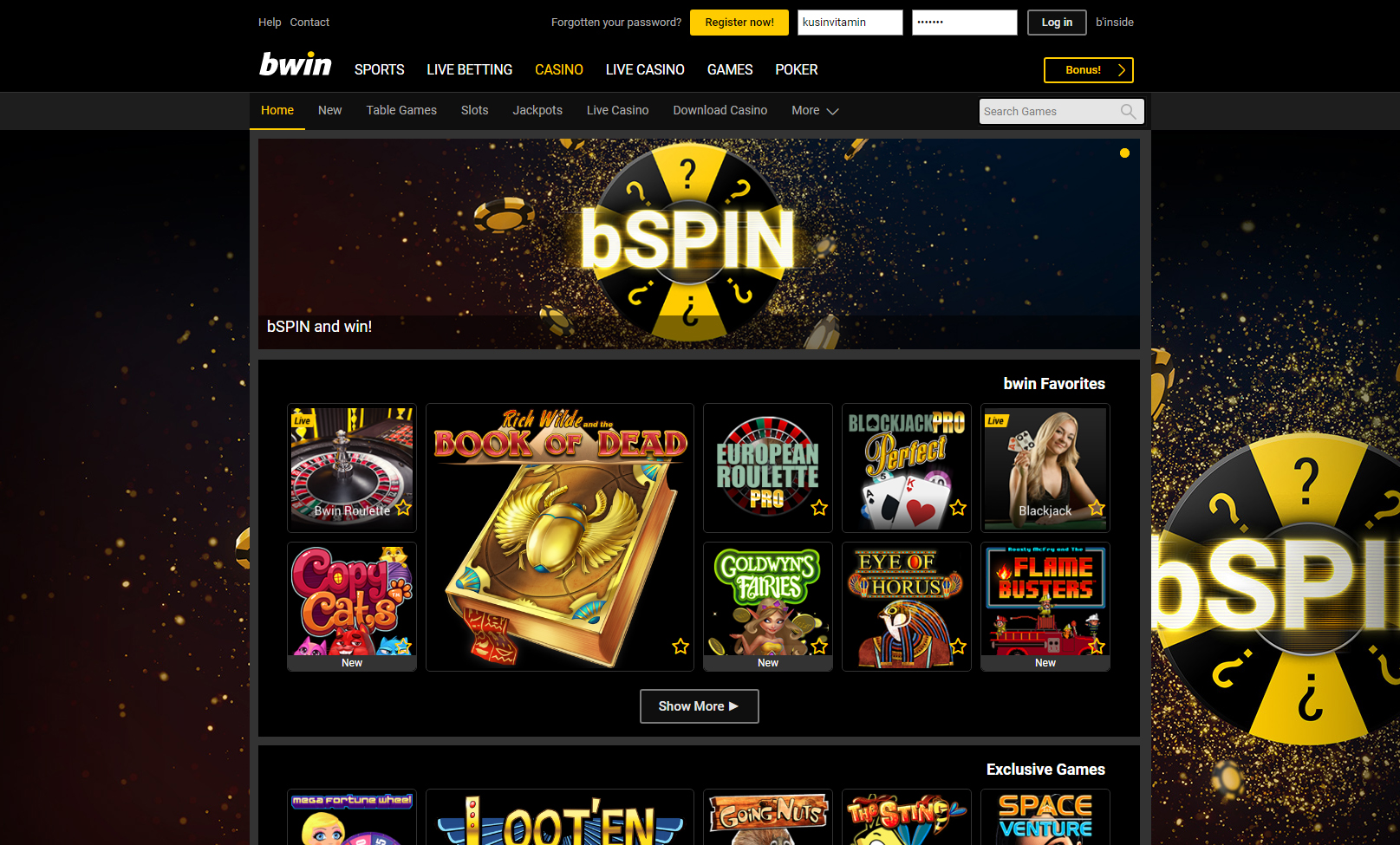
When considering a casino software platform, we are talking about a complex ecosystem of interconnected systems. At its core sits the gaming server, which contains the random number generator and game logic for thousands of titles. That server communicates with a player account management system that monitors balances, loyalty points, and session history in real time. Layered on top is the front-end client—the website or app you actually interact with—which must render graphics, handle user input, and maintain a stable connection without consuming excessive device resources. Bwin Casino operates on a platform that combines components from multiple specialist providers instead of relying on a single monolithic system. This modular design means the sportsbook engine, the live casino streaming infrastructure, and the slot aggregation layer can each function on best-in-class technology while sharing a unified login and wallet.

Under the hood, a content delivery network caches static assets such as game thumbnails and promotional banners across servers worldwide, cutting latency no matter your geographic location. Meanwhile, a message queue system handles the continuous stream of bet settlements, bonus triggers, and notification dispatches without bottlenecks. The tangible benefit is that when you wager at a blackjack table, the result arrives without visible lag, and your balance updates instantly. For the operator, this architecture offers the flexibility to add new game providers without re-engineering the entire platform, making sure that the game library can expand rapidly to meet player demand. The drawback is that integrating disparate systems increases the points of potential failure, which is why robust monitoring and redundancy are non-negotiable requirements.
Aggregated Gaming and Provider Diversity
A current casino platform has to work as a content aggregator, pulling slot titles, table games, and instant-win products from numerous independent studios. Aggregator platforms like Pariplay, Relax Gaming, and SoftSwiss serve as intermediaries, giving casinos a unified integration point through which they tap into a portfolio of thousands of games. For the player, this translates directly into diversity—the distinction between a lobby with 300 slots and one with 3,000 is nearly always an aggregation layer. Bwin Casino brings together major players like NetEnt, Play’n GO, and Pragmatic Play next to specialized developers such as Nolimit City and Hacksaw Gaming. This mix means we can provide all the way from low-volatility fruit machines to highly volatile narrative-driven slots with five-figure maximum win potentials.
The aggregation model introduces certain challenges. Each studio operates on its own release calendar, and their games come with distinct technical requirements and return-to-player configurations. Some developers optimize primarily for mobile play with portrait-mode-first designs, while others create landscape-oriented experiences that stand out on desktop. From our perspective, managing this aggregated library involves weeding out low-quality titles that do not fulfill performance standards, while guaranteeing the portfolio includes the full spectrum of player preferences. A common misconception is that aggregated platforms face slower loading times because assets are fetched from multiple third-party servers. In well-engineered implementations, however, a wrapper technology loads in advance game shells and standardises communication protocols, so the move from a NetEnt slot to a Microgaming table game feels seamless.
Bonus System Mechanics and Staking Logic
The bonus system on a gambling site is much more than a mere promotional device—it is a sophisticated rules engine that must monitor multiple simultaneous offers, game contribution percentages, and time-limited conditions for numerous active user accounts. When you claim a welcome bonus at Bwin Casino, the platform attaches a specific bonus agreement to your account. This contract specifies the betting requirement multiplier, the range of allowed games, the contribution rate each game type adds toward the threshold, and the expiration time determined to the exact minute. Some slots contribute 100% of each bet toward wagering, while casino table games like blackjack or roulette may count only 10% or 20% because their smaller casino edge gives the player a mathematical edge in clearing the bonus.
The platform must also enforce responsible mechanics such as maximum bet limits while a bonus is in effect and stop bonus abuse patterns. If the system recognizes that a player is wagering big sums on high-RTP slots to rapidly complete wagering requirements, then moving to low-risk games once the bonus is completed, it can identify these trends automatically. Concurrently, the bonus engine oversees free spin awards, which often come with their own group of conditions—separate wagering requirements on winnings, maximum spin values, and limited games. For the player, understanding that this engine works reliably and openly is what turns bonus terms appear as reasonable terms rather than hidden traps.
Mobile-Friendly Design and Device-Agnostic Coherence
Gaming on mobile now constitutes the greater part of online casino sessions, which has forced platforms to redesign their whole design approach. A platform that just compresses a desktop website to fit a phone screen provides a subpar experience with small buttons, illegible text, and common mis-taps. The current strategy is adaptive progressive web design that identifies your device’s screen size, operating system, and connection speed, then delivers an optimised interface. At Bwin Casino, the platform adapts the game lobby layout, cashier flow, and even the resolution of streamed live dealer feeds based on if you are using an iPhone over 5G, an Android tablet on Wi-Fi, or a desktop computer with a large monitor. Tap target sizes grow on smaller screens, and navigation condenses into thumb-friendly menus placed at the bottom of the viewport.
Cross-device consistency reaches beyond visual layout to session persistence. If you begin a gaming session on your laptop, put down some sports bets during a lunch break on your phone, and then open a live casino table on your tablet in the evening, the platform must reconcile all of this activity against a single account state without duplication or lag. This requires a centralised player wallet that updates in near real-time across all session instances. The technical challenge is far from simple—network interruptions on a mobile device must not lead to duplicate bet placements or incorrect balance displays. Bwin Casino manages this through idempotent transaction processing, where each action carries a unique identifier that prevents the system from processing it twice, regardless of how many times the request is re-sent after a connection drop.
System Performance and System Dependability
Availability is marca.com the underlying measure that shapes player trust more than any bonus or game selection. A platform that fails during evening rush periods or hangs during payment processing swiftly undermines the trust that a casino relies upon. The infrastructure at Bwin Casino is centered on redundancy: game servers operate in clusters where when a single node goes down, traffic is redirected seamlessly to a sibling node with no break to live gameplay. Database systems mirror in real-time to redundant instances in different regional data centres, so a hardware catastrophe at one location does not result in data loss. The platform’s operations team tracks response times, error rates, and server load through monitoring panels that raise alarms when any metric moves outside normal range, frequently enabling engineers to resolve issues before players detect degradation.
For the player, platform reliability shows up in practical terms. Game rounds finish in under a second, deposits reflect in the account balance instantly, and withdrawal requests process without error messages or mysterious denials. When issues do occur—and they always will in any complex system—the standard of the platform’s error handling separates a professional service. Rather than showing obscure system messages, the platform ought to clarify what occurred in simple terms and provide a definite way to resolution, such as waiting a few minutes and attempting once more or getting help with a unique ticket ID. Load testing is carried out continuously, with simulated traffic spikes that greatly surpass standard user volumes to guarantee that big sports matches or new game releases do not overwhelm the infrastructure, preserving the experience stable when player numbers spike.